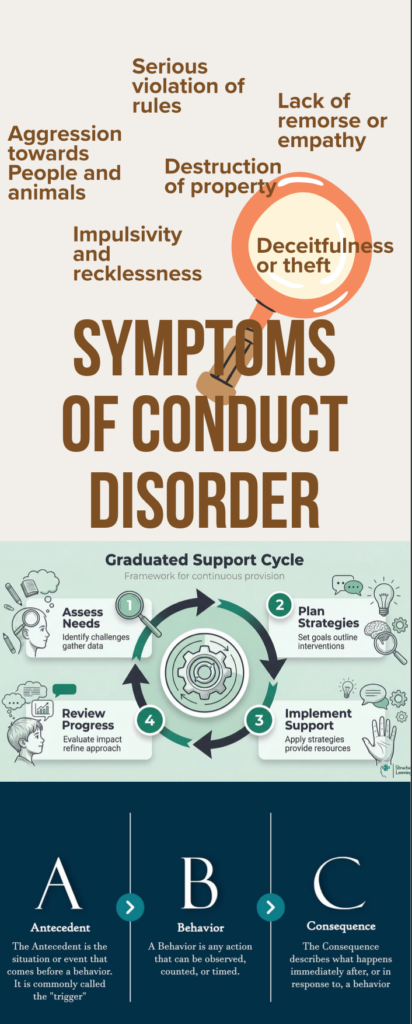
What to put in infographic:
- Examples of strategies (e.g. diagrams, images)
- Quick, easy to read information
STRATEGIES:
- Observe and define
- Be clear of what behaviours you want to address and which behaviours are most important and which can wait (Can use and ABC chart- Antecedent, Behaviour, Consequences)
ABC chart
- As soon as possible after a target behaviour has occurred, make note of the things that preceded it (antecedent) and then what happened afterwards (consequences), including what the teacher did, but also what others did, such as classmates
- Helpful for understanding the sequences of behaviours and for also being clear about what the behaviour is
- However, they are time consuming, making it unrealistic to expect busy teachers to fill in multiple ABCs a day
Balance opportunities and limits
- Seek to balance the opportunity for positive, prosocial behaviours that are noticed and praised, alongside consistent boundaries and limits
Find opportunities to praise the child when they are being good
- Children who are antisocial need reasons to try out and develop more prosocial patterns of behaviour, to see the benefits of those behaviours and to keep doing them
- Seek opportunities to “catch the child being good”
- Consistent behavioural expectations
- Positive reinforcement systems
- Providing targeted social skills
- Coordinating with mental health professionals and families
- Minimise distractions
- Seat child close to a good role model
- Provide structure
- Provide routine
- Breaks
- Identify triggers